
What Makes a DXF File Manufacturing-Ready?

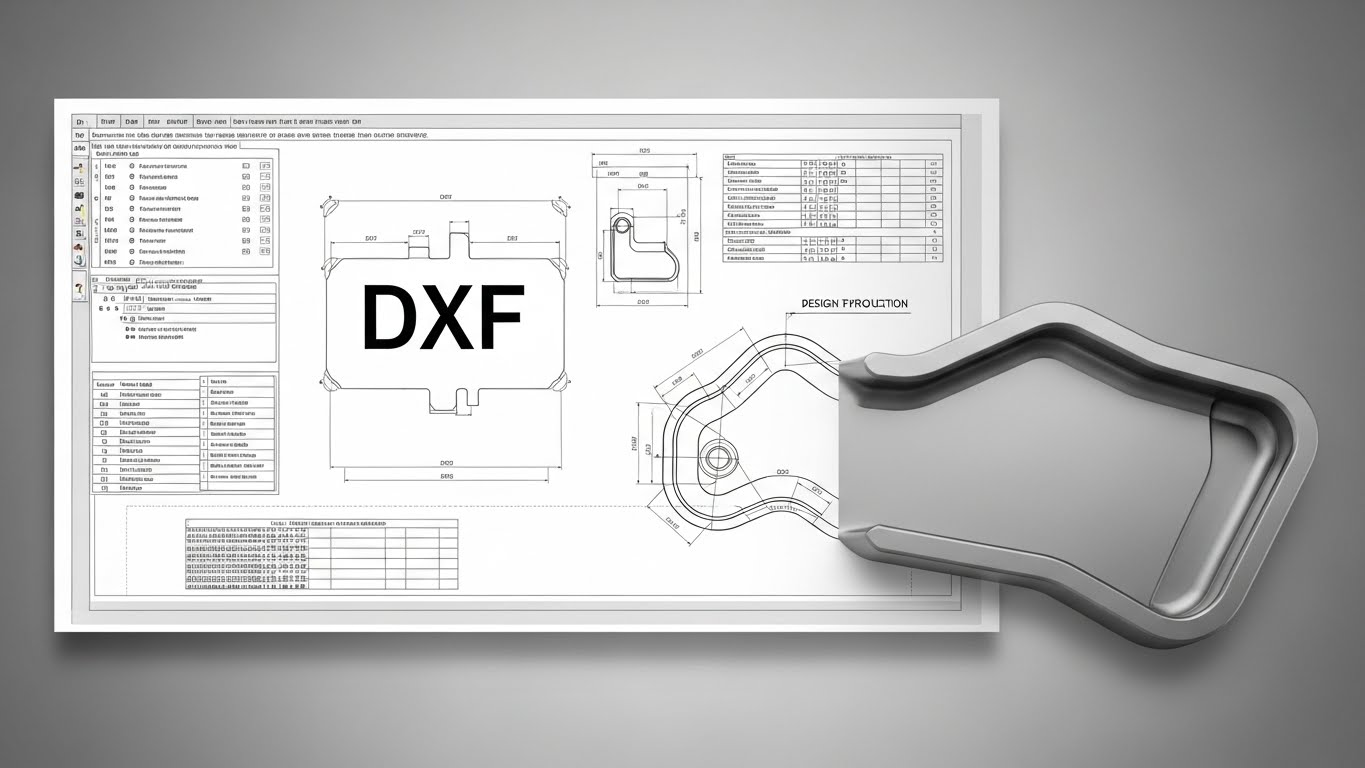
In CNC cutting and metal fabrication, a manufacturing-ready DXF file is more than a clean drawing. It is a file designed to be used directly on CNC machines without additional edits, rework, or corrections. These files are created with real production conditions in mind.
1. Clean and Accurate Geometry
A manufacturing-ready DXF file contains clean, closed, and consistent geometry. Overlapping lines, open paths, or broken shapes can cause machine errors and production delays. Clean geometry ensures smooth and accurate cutting.
2. Precise Dimensions and Correct Scaling
Accuracy is critical in CNC manufacturing. Manufacturing-ready DXF files are created at the correct scale with precise dimensions. Even small scaling issues can lead to wasted material and costly production mistakes.
3. Clear and Organized Layer Structure
Well-organized layers help CNC operators understand the file quickly. Cutting lines, holes, and details should be separated logically. A clear layer structure reduces setup time and minimizes the risk of cutting errors.
4. Design Optimized for CNC Cutting Logic
Not every DXF file is suitable for production. Manufacturing-ready designs consider cut order, internal and external contours, and machine tolerances. This ensures stable cutting, accurate results, and fewer production issues.
5. Tested in Real Manufacturing Environments
A truly manufacturing-ready DXF file is tested under real production conditions. Files that are refined based on practical feedback deliver reliable and predictable results on CNC machines.
Manufacturing-ready DXF files simplify CNC manufacturing by reducing errors, saving time, and improving efficiency. With Hardsheet, every DXF and PDF file is created to meet real-world production needs—delivering designs made to work.