
Sheet Metal Selection Guide: Choosing the Right Material and Thickness for CNC DXF Projects

When you purchase a high-quality DXF file for your CNC laser, plasma, or waterjet business, selecting the right digital template is only the first step. The real magic happens on the factory floor when you choose the correct material type and thickness (gauge) for the job.
Using a sheet that is too thin can cause your product to warp, bend, or fail structurally. Choosing a sheet that is too thick increases material costs, shipping weights, and machine cycle times.
In this industrial guide, we’ll analyze how to pair the most common CNC DXF design categories with the perfect metal specs.
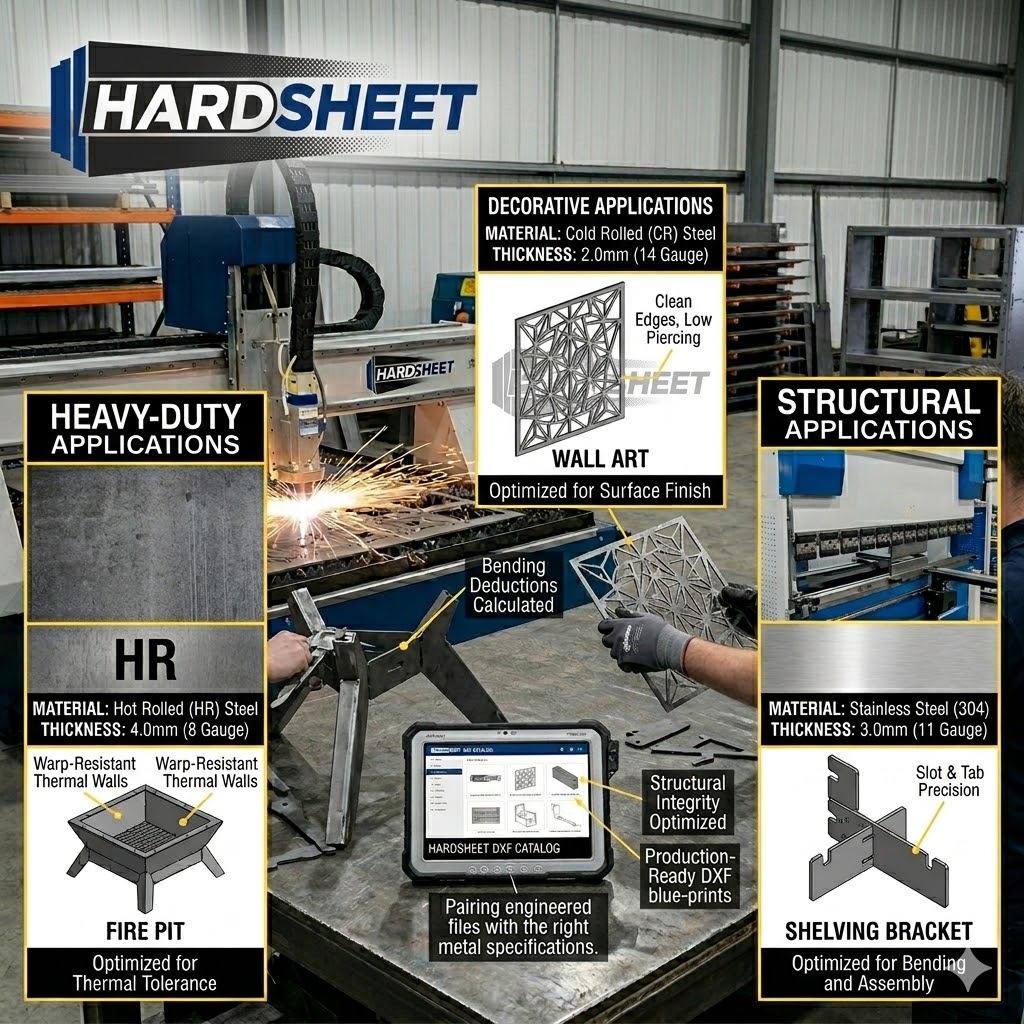
1. Heavy-Duty Fire Pits & Flat-Pack Grills
Products that experience extreme, repeated thermal cycles demand thick, resilient carbon steel to prevent warping and buckling.
-
Recommended Thickness: 3.0mm to 4.0mm (Approx. 11 to 8 Gauge).
-
Material Type: HR (Hot Rolled) Steel or Corten Steel.
-
Why? Hot rolled steel is highly cost-effective for heavy fabrication and holds up exceptionally well against direct flame. Corten steel is even better if your customers want that premium, self-protecting rustic rust patina over time without structural degradation. Never use thin 1.5mm or 2.0mm sheets for fire pit walls, as the heat will deform them during the very first use.
2. Metal Wall Art & Decorative Privacy Panels
For decorative interior or exterior panels, structural load-bearing capacity is low, but edge cleanliness and surface finish are everything.
-
Recommended Thickness: 1.5mm to 2.0mm (Approx. 16 to 14 Gauge).
-
Material Type: CR (Cold Rolled) Steel or Aluminum (for outdoor rust resistance).
-
Why? Cold rolled steel offers a smooth, oil-free surface finish that is perfect for immediate powder coating or painting without heavy sandblasting. At 1.5mm to 2.0mm, the sheet is sturdy enough not to vibrate or bend on the wall, yet light enough to keep shipping costs low and laser cutting speeds incredibly fast.
3. Parametric Furniture, Shelving, and Brackets
Interlocking workshop furniture, industrial shelves, and mechanical brackets need to handle physical loads and resist mechanical wear.
-
Recommended Thickness: 2.0mm to 3.0mm (Approx. 14 to 11 Gauge).
-
Material Type: PO (Pickled and Oiled) Steel or Stainless Steel (304 Grade).
-
Why? Pickled and Oiled steel has the scale removed, making it perfect for precise press brake bending and slot-and-tab interlocking fits. It ensures that your calculated K-factor and bending allowances remain highly accurate across the entire production run.
Conclusion: Engineering Matches Material
A beautiful 2D vector path means nothing if it doesn’t translate to a durable 3D physical product. That is why professional technical draughtsmen don’t design “generic” files.
At Hardsheet, we optimize our DXF files with specific material behaviors in mind. Our interlocking tolerances, thermal relief slots, and structural bridges are meticulously engineered to match industry-standard sheet metal gauges. When you buy a file from us, you get a blueprint tailored for real-world manufacturing success.
Stop wasting scrap metal on trial and error. Choose engineered files built for your specific material goals.
👉 Explore Our Production-Ready DXF Library by Material Categories



Hello, I think your website might be having browser compatibility issues. When I look at your website in Safari, it looks fine but when opening in Internet Explorer, it has some overlapping. I just wanted to give you a quick heads up! Other then that, excellent blog!